Cybersecurity is changing faster than people realize. Within the last few years, AI has exploded onto the scene, powered by tools from OpenAI that many of us use every day. Traditional red-team vs. blue-team skill sets were designed for a world of manual attacks and manual defenses.
But the reality is that cybersecurity didn’t start this way. In the early days, everything was simpler — but also harder. Attacks were mostly manual, defenses were manual, and if something broke, someone had to sit there and figure it out line by line. Then we shifted into the “script era,” where both attackers and defenders automated repetitive tasks. Suddenly, exploitation frameworks, scanners, and defensive scripts became normal tools.
Now we’re entering the next phase. Blue teams aren’t just watching dashboards anymore — SIEMs, SOAR platforms, and EDR systems automatically correlate logs, detect anomalies, and trigger responses without a human touching it. What used to take hours is now happening in seconds.
And AI is pushing this even further. We’re no longer just running scripts — we’re building systems that understand, predict, and respond. Automation is becoming the core of cybersecurity, not an add-on.
As cybersecurity keeps evolving, the biggest shift we’re seeing isn’t just new tools — it’s a completely new philosophy. For decades, everything revolved around the classic “red” vs. “blue” model. One side attacks, the other defends. Humans on both ends, thinking, scripting, reacting.
But that model is becoming outdated.
Modern threats don’t wait for humans to respond. Attacks happen at machine speed. Malware adapts. Phishing campaigns are automated. Adversaries are using AI to generate exploits, customize payloads, and constantly change their attacks.
So defenders have to evolve too.
We’re moving into a world where AI and automation are not just assistants — they’re taking over the first layers of defense entirely. Instead of analysts manually triaging alerts, SIEMs correlate events automatically. Instead of searching logs for hours, AI summarizes anomalies in seconds. Instead of red teams manually crafting attacks, autonomous adversarial simulations will constantly test environments 24/7.
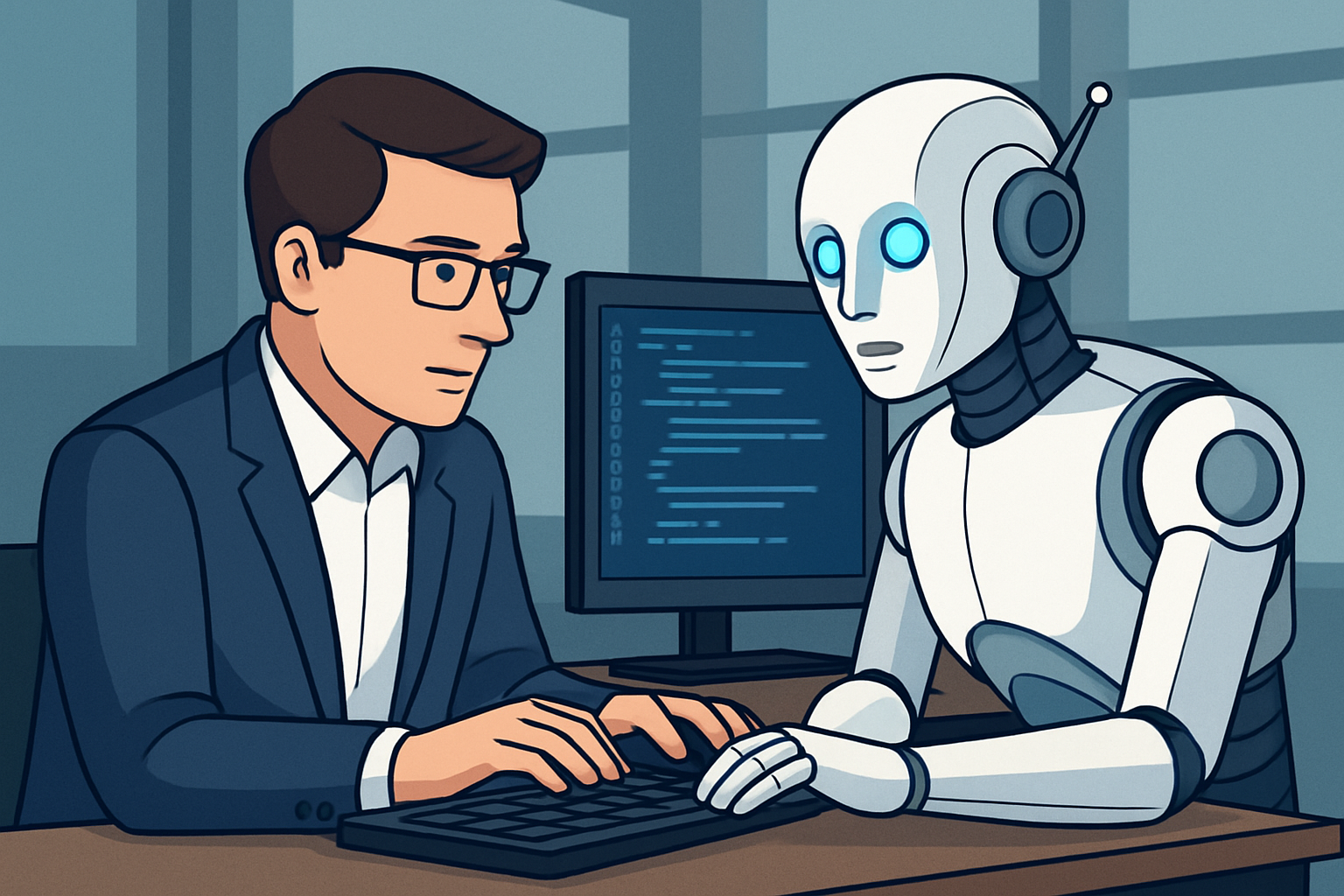
In the future, the real battlefield won’t be red vs. blue. It will be human + AI vs. automated threats.
Human analysts will still matter — but their role shifts from “doing everything by hand” to orchestrating intelligent systems. The value isn’t in manually running scans or writing detections; it’s in designing adaptive logic, validating AI decisions, and managing automated defensive loops.
The teams that embrace this shift now will be the ones prepared for the next decade of cybersecurity.
What the next decade will look like
If we project forward, cybersecurity in the next decade will look almost nothing like the environment we work in today. Human analysts won’t disappear — but the way they operate will fundamentally change. Here’s what the industry is already moving toward:
1. AI-driven SOCs will become the norm
Most tier-1 work — alert triage, ticket creation, initial investigation — will be handled by AI agents running 24/7.
AI will:
- Read logs
- Correlate alerts
- Summarize incidents
- Trigger automated responses
…before a human even sees the problem.
Analysts will step in only when something truly complex happens.
2. Red teams will shift to autonomous adversary simulations
Instead of humans manually exploiting systems, AI simulators will constantly probe networks, generate new attack paths, mutate payloads automatically, and test defenses non-stop.
This will look more like continuous penetration testing, entirely powered by machine logic.
Professionals will spend more time training, validating, and guiding these models than running one-off assessments.
3. Blue teams will become automation engineers
The job title “SOC Analyst” will evolve into something closer to:
- AI Security Operator
- Automation Architect
- AI-Augmented Defender
- Detection Engineer (with ML-assisted pipelines)
Instead of manually responding, they’ll design:
- Automated playbooks
- Adaptive detection logic
- AI feedback loops
- Dynamic deception environments
Their work will be higher-level and more strategic.
4. Identity, behavior, and prediction will be the core of defense
Traditional perimeter-based security will fade. The future will focus on:
- Behavioral analytics
- Continuous identity verification
- User and machine behavior modeling
- Predictive threat scoring
The goal will be stopping attacks before they start, not reacting after the damage is done.
5. AI will become a teammate, not a tool
Security teams will rely on AI the same way pilots rely on autopilot:
- Humans make the final call
- AI handles the speed, scale, and complexity
Instead of drowning in alerts, defenders will be directing intelligent systems — like commanding a team of digital analysts that never sleep.
6. Cybersecurity will be more like operating a living system
Systems will adapt continuously:
- Automated deception techniques (fake assets, decoy credentials)
- Dynamic policy shifts
- Model retraining based on fresh telemetry
Defense will feel closer to biology — constantly adjusting to new stimuli.
7. The human role won’t disappear — it will evolve
In 5–10 years, the most valuable cybersecurity professionals will be those who:
- Understand AI
- Can design and maintain automation
- Know how to validate model outputs
- Can connect business risk to technical action
Manual skills will matter less. Strategic thinking, automation logic, and AI literacy will matter more.
The next decade won’t be defined by who can type commands the fastest — it will be defined by who can guide intelligent systems the most effectively.
Closing perspective
As the cybersecurity landscape transforms, the divide between human and machine capabilities is becoming a partnership rather than a replacement. The future won’t belong to the fastest typers or the biggest red vs. blue teams — it will belong to those who can harness AI, automation, and adaptive systems to stay ahead of threats moving at machine speed.
Cybersecurity is entering a new era where defenders don’t just react — they anticipate. Where automation handles the noise, and humans focus on strategy. And in this next decade, the individuals and organizations that embrace this shift now will be the ones who define what modern security looks like.